The Stakes are High: Why HACCP is Non-Negotiable for Japanese Cuisine
Japanese cuisine, celebrated for its delicate flavors and artistry, presents unique food safety challenges, particularly with the service of raw and lightly cooked items like sushi and sashimi. The very essence of these dishestheir freshness and minimal processingmakes them a potential breeding ground for harmful bacteria and parasites. For Japanese restaurants in Canada, ensuring the safety of their offerings is not just a matter of quality control; it's a fundamental responsibility. This is where a Hazard Analysis and Critical Control Points (HACCP) system becomes an indispensable tool. HACCP is a systematic, science-based approach to food safety that identifies potential hazards and implements measures to control them throughout the food production process. It's a proactive system designed to prevent foodborne illness, rather than reacting to it after the fact. In Canada, the Canadian Food Inspection Agency (CFIA) recognizes HACCP as the gold standard for food safety, and its implementation is crucial for any food business, especially those dealing with high-risk products like raw fish.
The Seven Principles of HACCP: A Sushi Chef's Perspective
Principle 1: Conduct a Hazard Analysis
A robust HACCP plan is built upon seven core principles. For a Japanese restaurant, these principles provide a framework for ensuring the safety of every dish that leaves the kitchen. Let's look at them from a sushi chef's point of view:
This is where you identify all the potential biological, chemical, and physical hazards that could occur at each step of your food preparation process. For a sushi restaurant, this could include parasites in raw fish, bacteria in rice, or cross-contamination from cutting boards.
CCPs are the points in your process where you can apply a control to prevent or eliminate a hazard. For example, the receiving of fish, the cooking of rice, and the acidification of sushi rice are all critical control points.
For each CCP, you need to establish a critical limit – a maximum or minimum value to which a hazard must be controlled. For instance, the critical limit for freezing fish to kill parasites might be -20°C for 7 days.
Monitoring involves regularly observing and measuring your CCPs to ensure they are under control. This could involve checking the temperature of your freezers daily or testing the pH of every batch of sushi rice.
If monitoring indicates that a CCP is not under control, you need to have a plan for corrective action. This could mean rejecting a shipment of fish that arrives at the wrong temperature or discarding a batch of rice that doesn't meet the required pH.
Verification involves activities other than monitoring that determine the validity of the HACCP plan. This could include reviewing your records, calibrating your thermometers, or having your plan reviewed by a third-party expert.
Finally, you need to keep detailed records of your HACCP plan, including your hazard analysis, CCPs, critical limits, monitoring data, and corrective actions. This documentation is essential for demonstrating compliance to health inspectors and for continuously improving your food safety system.
CCP #1: Receiving – The First Line of Defense
The first opportunity to control potential hazards is at the receiving dock. For a Japanese restaurant, this means establishing strict protocols for accepting deliveries of fresh and frozen seafood. Sourcing from a trusted, HACCP-certified supplier like True World Foods is the first and most critical step. A certified supplier has already implemented their own rigorous food safety controls, providing you with a higher level of assurance. When receiving a shipment, your staff should be trained to inspect it for the following:
By partnering with a supplier like True World Foods, you can also leverage their advanced cold chain logistics. Their JapanFish Express service, for example, ensures that fish is transported in a temperature-controlled environment from the source to your door, minimizing the risk of temperature abuse.
CCP #2: Storage – Maintaining the Cold Chain
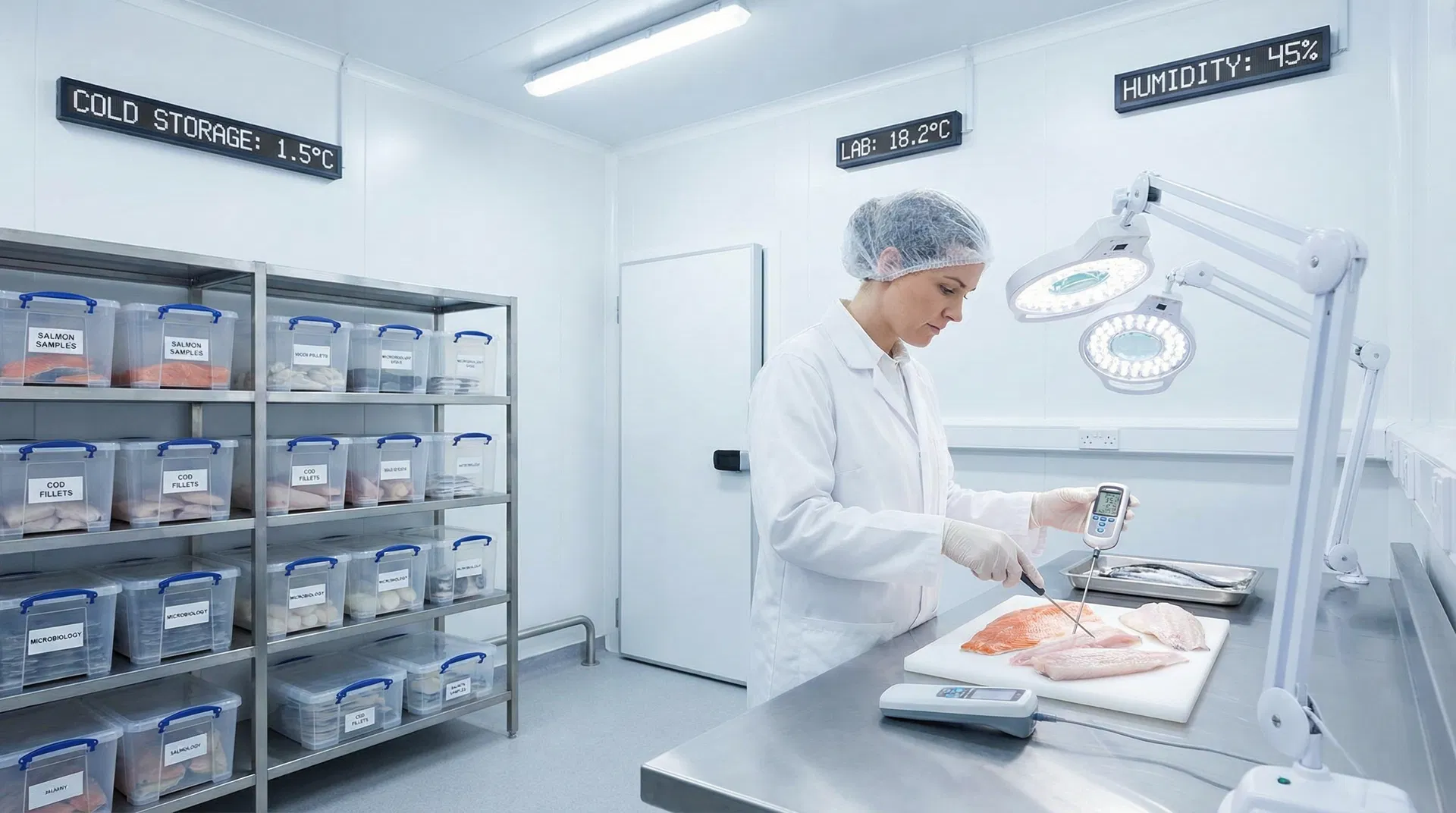
Once you've accepted a shipment of seafood, it's crucial to maintain the cold chain to prevent the growth of bacteria. Different types of seafood have different storage requirements, so it's important to have a clear understanding of the proper temperatures and storage times for each. As a general rule, fresh fish should be stored at or below 4°C (40°F) and used within a few days. Frozen fish, on the other hand, should be stored at or below -18°C (0°F). For parasite destruction, the requirements are even more stringent. The CFIA recommends freezing fish to -20°C (-4°F) for 7 days or -35°C (-31°F) for 15 hours. To prevent cross-contamination, it's also essential to have dedicated freezers and refrigerators for seafood, separate from other food items. This is especially important for raw fish, which should never come into contact with cooked or ready-to-eat foods.
CCP #3: Thawing – A Critical Step for Safety and Quality
Thawing frozen fish is a critical control point that is often overlooked. Improper thawing can not only compromise the quality of the fish but also create a breeding ground for bacteria. The only safe way to thaw frozen fish is in the refrigerator at a temperature of 4°C (40°F) or below. This allows the fish to thaw slowly and evenly, without ever entering the temperature danger zone (between 4°C and 60°C). Never thaw fish at room temperature or in warm water. While it may be faster, it can cause the outside of the fish to warm up to a dangerous temperature while the inside is still frozen. This creates the perfect environment for bacteria to multiply. Once thawed, fish should be used immediately and never refrozen.
CCP #4: The Art and Science of Safe Sushi Rice
Achieving the Target pH
While much of the focus in sushi safety is on the fish, the rice is an equally important consideration. Cooked rice is a potentially hazardous food because it provides a moist, nutrient-rich environment for bacteria to grow. To make sushi rice safe to hold at room temperature, it must be acidified with vinegar to a pH of 4.6 or below. This process, known as acidification, inhibits the growth of harmful bacteria like *Bacillus cereus*. Achieving the correct pH is a critical control point that requires precision and consistency.
CCP #5: Preparation and Service – The Final Touches
Once your fish is thawed and your rice is acidified, the final preparation and service steps are the last opportunity to control potential hazards. All food handlers should be trained on proper handwashing techniques and should wear gloves when handling raw fish. Cutting boards, knives, and other utensils should be thoroughly cleaned and sanitized between uses to prevent cross-contamination. It's also important to have separate cutting boards for raw fish and other foods. When preparing sushi for a display case or buffet, it's crucial to maintain time and temperature controls. Sushi should be kept at or below 4°C (40°F) and should be discarded after a set period of time (typically 4 hours).
Parasite Control: A Deep Dive into Freezing
As we've mentioned, freezing is the most effective way to kill parasites in raw fish. The most common parasite of concern in sushi is *Anisakis*, a type of roundworm that can cause a serious illness known as anisakiasis. While not all fish are at risk, many popular sushi fish, including salmon and mackerel, can be affected. The only way to ensure that these fish are safe to eat raw is to freeze them according to the CFIA's guidelines: -20°C (-4°F) for 7 days or -35°C (-31°F) for 15 hours. This is a critical control point that cannot be overlooked. By sourcing your fish from a HACCP-certified supplier like True World Foods, you can be confident that this critical step has already been taken care of. True World Foods' rigorous freezing protocols ensure that their fish is free from parasites, simplifying your HACCP plan and giving you peace of mind.
Training and Documentation: Your Keys to Consistency and Compliance
A HACCP plan is only as effective as the people who implement it. That's why thorough staff training is essential for any Japanese restaurant. All staff, from the head chef to the dishwasher, should be trained on the principles of HACCP and the specific procedures in your plan. This training should be ongoing and should be documented. In addition to training records, your HACCP documentation should include your hazard analysis, CCPs, critical limits, monitoring records, corrective action logs, and verification procedures. This documentation is not just a bureaucratic exercise; it's a vital tool for ensuring the consistency and effectiveness of your food safety system. It's also the first thing a health inspector will ask to see during an inspection.
Navigating Health Inspections in Canada
In Canada, food safety is regulated at both the federal and provincial levels. While the CFIA sets the national standards, each province has its own public health act and regulations. This means that the specific requirements for a Japanese restaurant can vary depending on where you are located. However, all health inspectors will be looking for the same thing: a commitment to food safety. A well-documented HACCP plan is the best way to demonstrate that commitment. It shows that you have a systematic approach to food safety and that you are taking the necessary steps to protect your customers. By having a solid HACCP plan in place, you can not only ensure a smoother inspection process but also build a reputation for quality and safety that will keep your customers coming back.