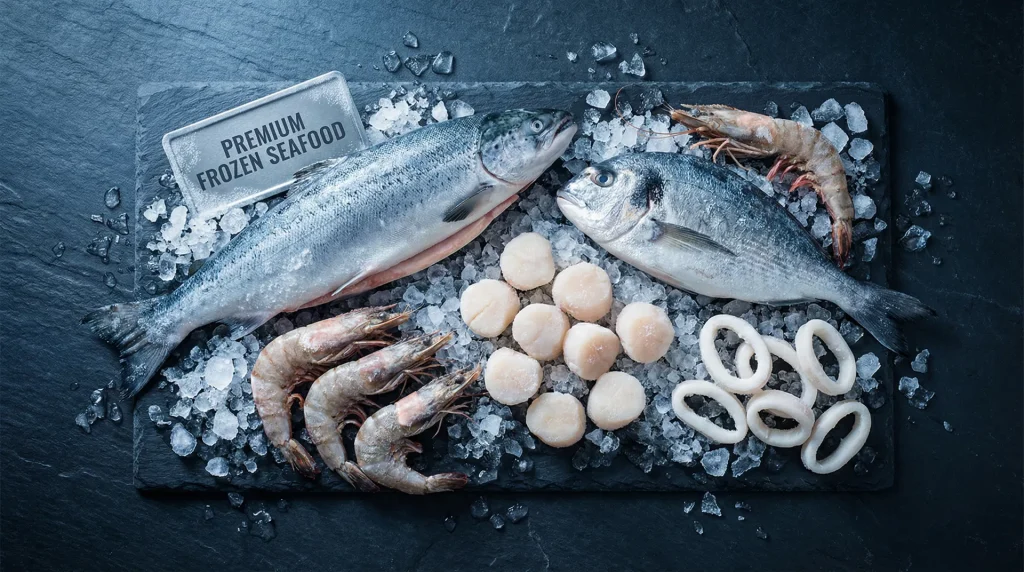
Introduction: The Persistent Myth of Fresh vs. Frozen
For decades, a simple mantra has dominated the culinary world: ‘fresh is always best.’ This belief, deeply ingrained in both chefs and consumers, suggests that seafood pulled directly from the ocean and served within hours is the pinnacle of quality. While the appeal of a just-caught fish is undeniable, this black-and-white view overlooks the incredible advancements in freezing technology and the complex realities of global seafood distribution. For restaurant professionals across Canada, clinging to this myth can mean missing out on higher quality, more consistent, and safer products that are often superior to their ‘fresh’ counterparts.
The truth is, the journey from water to plate is long and fraught with opportunities for quality degradation. A so-called ‘fresh’ fish that has spent days in transit, handled by multiple intermediaries, may be far from its peak by the time it reaches the kitchen. In contrast, a fish that is flash-frozen at sea, mere moments after being caught, can offer a more pristine and reliable culinary experience. This article will deconstruct the common myths surrounding frozen seafood, exploring the science, safety, and logistical advantages that make it a strategic choice for modern kitchens.
The Science of Freezing: How Time and Temperature Impact Quality
Slow Freezing vs. Flash Freezing: A Cellular-Level Difference
The difference between premium frozen seafood and a subpar product lies in the microscopic changes that occur during the freezing process. It all comes down to the formation of ice crystals within the fish’s cellular structure. When seafood is frozen slowly, at temperatures around -18°C (0°F), the water molecules have ample time to form large, jagged ice crystals. These crystals act like tiny knives, puncturing and rupturing the delicate cell walls of the muscle tissue. Upon thawing, these damaged cells can no longer retain their moisture, leading to a significant loss of fluida process known as drip loss. This results in a dry, mushy, or stringy texture and a diminished flavor profile, reinforcing the negative stereotypes associated with frozen fish. This is the type of freezing that typically occurs in a home freezer and is fundamentally different from professional methods.
In stark contrast, flash freezing utilizes extremely low temperatures, often below -40°C (-40°F), to freeze the product with incredible speed. This rapid temperature drop causes the water within the cells to form minuscule, smooth ice crystals that do not damage the cellular structure. By preserving the integrity of the cell walls, flash freezing effectively locks in the fish’s natural moisture, texture, flavor, and nutritional content. When a flash-frozen fish is properly thawed, it retains its firmness and succulence, delivering a sensory experience that is virtually indistinguishable from that of a perfectly fresh fish. This scientific distinction is the cornerstone of modern, high-quality frozen seafood and is a critical factor for chefs who refuse to compromise on quality.
Super-Freezing (-60°C): The Gold Standard for Preserving Freshness
While flash freezing represents a significant leap in quality preservation, the pinnacle of freezing technology is ‘super-freezing,’ which involves holding seafood at an ultra-low temperature of -60°C (-76°F). This method is particularly crucial for high-value species like bluefin tuna, which are prized for their delicate texture and vibrant color when served raw. At standard freezer temperatures, the myoglobin in tuna’s red muscle tissue begins to oxidize, causing the flesh to turn an unappetizing brown. However, at the extreme cold of -60°C, these oxidative processes are virtually halted. The cellular metabolism of the fish is suspended in a state of animation, preserving its just-caught color, flavor, and texture for an extended period, sometimes up to two years, without any perceptible loss in quality.
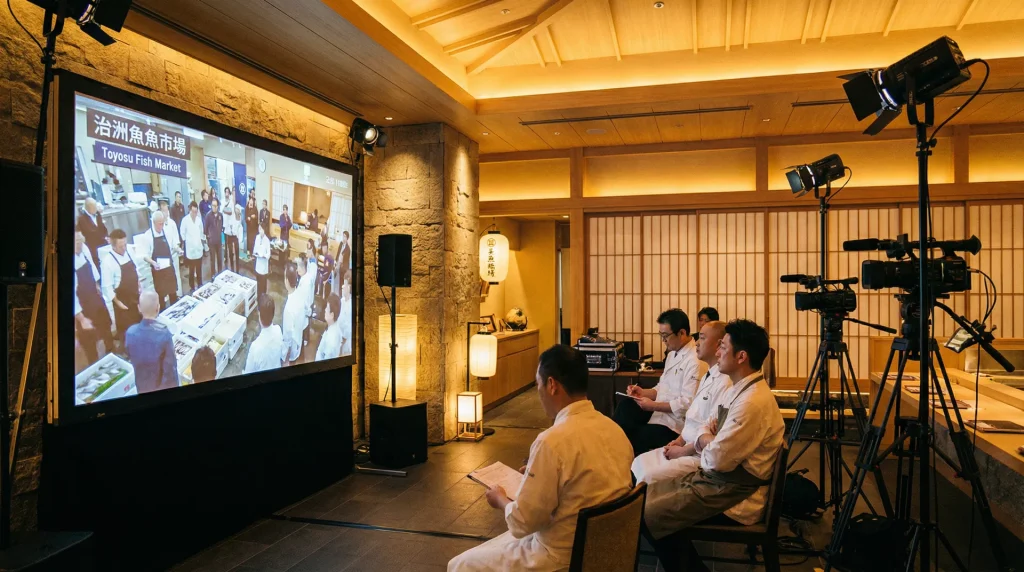
Achieving and maintaining this ultra-low temperature requires a specialized and unbroken cold chain from the moment of capture to final delivery. This is where a supplier like True World Foods Canada, with its advanced logistics and services like JapanFish Express, becomes indispensable. By managing a dedicated -60°C cold chain, they ensure that premium species, especially those intended for sushi and sashimi, arrive at the restaurant in a state of perfect preservation. This technology allows chefs in Vancouver or Toronto to serve tuna that is, for all intents and purposes, as fresh as what one might find at the Toyosu Market in Tokyo. It’s a game-changer that decouples peak quality from geography, providing unparalleled consistency and excellence.
Not Just for Quality: Why Freezing is a Critical Safety Step
Understanding FDA and CFIA Parasite Kill Requirements
Beyond preserving texture and flavor, freezing plays a non-negotiable role in seafood safety, particularly for fish intended for raw or undercooked preparations like sushi, sashimi, or ceviche. Wild fish are natural hosts to various parasites, such as Anisakis simplex, which can cause serious gastrointestinal illness in humans if ingested live. While thorough cooking effectively kills these parasites, for raw applications, a different intervention is required. Both the U.S. Food and Drug Administration (FDA) and the Canadian Food Inspection Agency (CFIA) have established strict guidelines that mandate freezing to destroy these harmful organisms. These regulations are a critical public health control measure for any food service establishment serving raw fish.
The specific requirements stipulate that fish must be frozen and stored at a temperature of -20°C (-4°F) or below for a minimum of 7 days (168 hours), or frozen at -35°C (-31°F) or below and stored for at least 15 hours. For establishments utilizing super-freezers, freezing at -35°C (-31°F) or below until solid and then storing at -20°C (-4°F) or below for 24 hours is also an approved method. Adhering to these protocols is not optional; it is a legal and ethical responsibility. Partnering with a trusted supplier who can provide documentation of their parasite destruction freezing process provides chefs with peace of mind and ensures they are serving a product that is not only delicious but also unequivocally safe for their patrons.
Can You Taste the Difference? The Surprising Results of Blind Taste Tests
Despite the scientific evidence, the ultimate test for any culinary product is in the tasting. Over the years, numerous blind taste tests have been conducted by culinary institutes, food journalists, and research organizations to pit high-quality frozen fish against its fresh counterpart. The results are often surprising and consistently challenge the ‘fresh is best’ assumption. In many of these studies, professional chefs and discerning consumers are unable to distinguish between properly flash-frozen fish and fresh fish. In some cases, the flash-frozen product is even rated as superior in terms of texture and flavor, particularly when the ‘fresh’ fish has endured a lengthy and less-than-ideal supply chain.
For example, a study by Oregon State University’s Seafood Research & Education Center found that flash-frozen salmon and tuna were rated as highly as, or higher than, fresh samples. The key is the immediacy of the freeze. A fish frozen at sea within minutes of being caught is a time capsule of peak freshness. In contrast, a ‘day-boat’ fresh fish might be several days old by the time it reaches a restaurant kitchen, having lost moisture and firmness along the way. These results empower chefs to make purchasing decisions based on actual quality and performance rather than on a romanticized but often inaccurate notion of ‘freshness.’ It confirms that with modern technology, the freezer can be a chef’s greatest ally in the pursuit of consistency and excellence.
When Frozen is Fresher Than Fresh: The Logistics of Seafood Distribution
The concept that a frozen product can be ‘fresher’ than a fresh one becomes clear when examining the modern seafood supply chain. For a restaurant in a landlocked Canadian city, a ‘fresh’ fish from a coastal region has likely embarked on a multi-day journey. This journey involves being caught, sorted, packed on ice, transported to a processor, filleted, re-packed, shipped to a distribution center, and finally delivered to the restaurant. Throughout this process, which can take anywhere from 3 to 10 days, the fish is constantly aging. Enzymes continue to break down the flesh, and quality steadily declines, even when kept on ice. The clock is always ticking.
Now, consider the alternative: a fish caught and processed on a factory trawler. Within hours, or even minutes, of leaving the water, it is filleted and flash-frozen to -40°C. Its biological processes are instantly halted. The fish is then glazed with a protective layer of ice to prevent dehydration and oxidation during storage. This product can be transported around the world with no degradation in quality. When it arrives at the restaurant kitchen months later and is properly thawed, it is in a state of preservation that is far closer to its just-caught condition than the ‘fresh’ fish that has been slowly deteriorating for a week. This logistical reality makes high-quality frozen seafood the most reliable and often the highest-quality option for the majority of restaurants that are not located directly beside a fishing dock.
From Freezer to Plate: Mastering the Art of Thawing for Optimal Results
Even the most perfectly frozen seafood can be ruined by improper thawing. The care taken to preserve the fish’s cellular structure during freezing must be matched by a gentle and controlled thawing process to retain its quality. The single worst mistake is to thaw fish at room temperature or in warm water. This not only creates a food safety risk by allowing bacteria to multiply on the surface but also causes the exterior of the fish to become mushy while the inside remains frozen. The best and safest method is to thaw the seafood overnight in a refrigerator set to a temperature between 1°C and 4°C (34°F to 39°F). Placing the vacuum-sealed portion on a rack over a tray allows for even air circulation and lets any condensation drip away.
If time is short, a quicker method is to use a cold water bath. Submerge the sealed fish in a bowl of cold tap water, changing the water every 30 minutes to ensure it stays cold, until the fish is thawed. It is crucial that the fish remains in its airtight packaging to prevent it from becoming waterlogged and losing flavor. One critical safety note: never thaw fish inside its vacuum-sealed bag if it will be left for an extended period, as this can create an oxygen-free environment where Clostridium botulinum bacteria could potentially grow. For best results, puncture the bag before a long refrigerator thaw. By mastering these simple but essential thawing techniques, chefs can ensure that the quality locked in by flash-freezing is fully expressed on the plate.
The Sustainable Choice: How Frozen Seafood Reduces Waste and Environmental Impact
In an era of increasing environmental awareness, the sustainability of our food choices is a major concern for both businesses and consumers. Frozen seafood offers significant advantages in this regard, primarily through the drastic reduction of food waste. The fresh seafood supply chain is notoriously inefficient, with some estimates suggesting that up to 23% of all seafood harvested is lost or wasted before it ever reaches a consumer. This spoilage occurs at every step, from the boat to the processing plant to the retail counter and finally in the restaurant kitchen. This waste represents not only a loss of valuable food and revenue but also a squandering of the natural resources and energy used in the harvesting and transportation process.
Flash-freezing at the source dramatically extends the shelf life of seafood from a matter of days to over a year, virtually eliminating spoilage within the supply chain. For restaurants, this means perfect portion control and the ability to manage inventory with far greater precision. Chefs can use exactly what they need, when they need it, leaving the rest in the freezer with no loss of quality. This minimizes kitchen waste and improves profitability. Furthermore, the extended shelf life allows for more efficient transportation methods, such as shipping by sea rather than air freight, which carries a much lower carbon footprint. By embracing high-quality frozen seafood, the Canadian food service industry can take a meaningful step towards a more sustainable and less wasteful future.
A Hybrid Approach: True World Foods Canada’s Strategy for Quality and Consistency
Recognizing the distinct advantages of both fresh and frozen formats, the most sophisticated suppliers adopt a strategic, hybrid approach. At True World Foods Canada, the decision to offer a product as fresh or frozen is not based on a rigid ideology, but on a careful calculation of what will deliver the absolute best quality and safety to the chef. For locally sourced species where the supply chain is short and direct, fresh is often a viable and excellent option. However, for the vast majority of products, especially those sourced from the rich fishing grounds of Japan and around the globe, freezing is the superior pathway to the Canadian kitchen.
This strategy leverages the full arsenal of modern preservation techniques. It means using -60°C super-freezing for prized tuna to lock in its pristine color and texture for world-class sashimi. It involves utilizing advanced flash-freezing technology at the source for a wide array of fish and shellfish, ensuring they arrive with their just-caught integrity intact. It also means managing a state-of-the-art cold chain, a logistical ballet that ensures these products remain at their optimal temperature from vessel to vendor. By offering a curated portfolio of both impeccably fresh and technologically advanced frozen products, suppliers like True World Foods Canada empower chefs to build their menus with confidence, knowing every item has been handled for maximum quality, consistency, and safety.
Conclusion: Embracing Frozen Seafood as a Tool for Culinary Excellence
The debate between frozen and fresh seafood is no longer a simple dichotomy. Armed with an understanding of modern freezing science, safety regulations, and global logistics, the professional chef can see past the outdated myths. High-quality, flash-frozen seafood is not an inferior substitute for fresh; it is a distinct product category that often represents a more intelligent, consistent, and safer choice. It provides access to a global pantry of species at their peak of freshness, regardless of season or geography. It offers a solution to the pervasive problem of food waste and provides a foundation for a more sustainable seafood industry. By partnering with knowledgeable suppliers who have mastered the cold chain, Canadian restaurant professionals can leverage the power of frozen seafood to elevate their cuisine, streamline their operations, and deliver an exceptional dining experience to their guests, day in and day out.