Beyond the Sticker Price: Understanding Your True Seafood Cost
In the fast-paced world of Canadian hospitality, every ingredient's cost must be scrutinized. For restaurant owners and chefs specializing in premium seafood, the initial price paid for a whole fish is only the beginning of the story. The true cost, the one that directly impacts your bottom line, is hidden within the fish itself. It lies in the percentage of pristine, usable meat that can be expertly extracted from the whole animal. This is the concept of fish yield, a critical metric that separates proficient kitchens from the rest. Understanding and mastering yield calculations can transform your seafood program from a cost center into a significant profit driver, ensuring that every gram of magnificent Bluefin tuna or delicate Madai snapper is accounted for.
This guide provides a comprehensive framework for calculating, tracking, and maximizing the yield of your premium seafood. We will explore industry-standard yield percentages, demonstrate how to calculate the true cost per edible portion, and offer practical techniques to reduce waste. Furthermore, we will analyze the strategic decision between purchasing whole fish versus pre-portioned cuts and discuss how sourcing top-tier seafood from a trusted partner like True World Foods Canada inherently enhances yield. By embracing the art and science of fish yield, you can unlock greater profitability, elevate your culinary creations, and build a more sustainable and efficient kitchen operation.
What is Fish Yield? A Foundational Metric for Culinary Success
Fish yield is the percentage of a whole fish that is usable, sellable meat after it has been cleaned, gutted, scaled, and filleted. It is the ultimate measure of efficiency in seafood butchery. The calculation is straightforward yet powerful: (Usable Weight / Total Initial Weight) × 100 = Yield Percentage. This simple formula is the bedrock of seafood cost analysis, allowing chefs to move beyond the wholesale price per kilogram and understand the real cost of the product they are putting on the plate. For any high-end Canadian restaurant where seafood is a star attraction, mastering this metric is not just good practiceit's essential for financial health and culinary excellence. It provides the data needed to price menus accurately, control inventory, and minimize waste, directly impacting profitability.
Yield percentages vary significantly across species, influenced by the fish's anatomyhead size, bone structure, and fat content all play a role. For instance, a round, robust fish like a Bluefin Tuna typically yields between 45% and 55% of its weight in usable loins. In contrast, a large, high-quality farmed Atlantic Salmon, known for its full body, can yield an impressive 60% to 70%. Meanwhile, many snapper species, with their larger heads and more pronounced bone structure, often fall into the 35% to 45% range. These benchmarks are crucial for purchasing decisions and menu costing, but they are not fixed. The skill of the butcher, the quality of the fish, and even the season can cause these percentages to fluctuate, highlighting the need for consistent in-house tracking.
The Butcher's Art: Techniques for Maximizing Yield
Precision Cutting and Handling
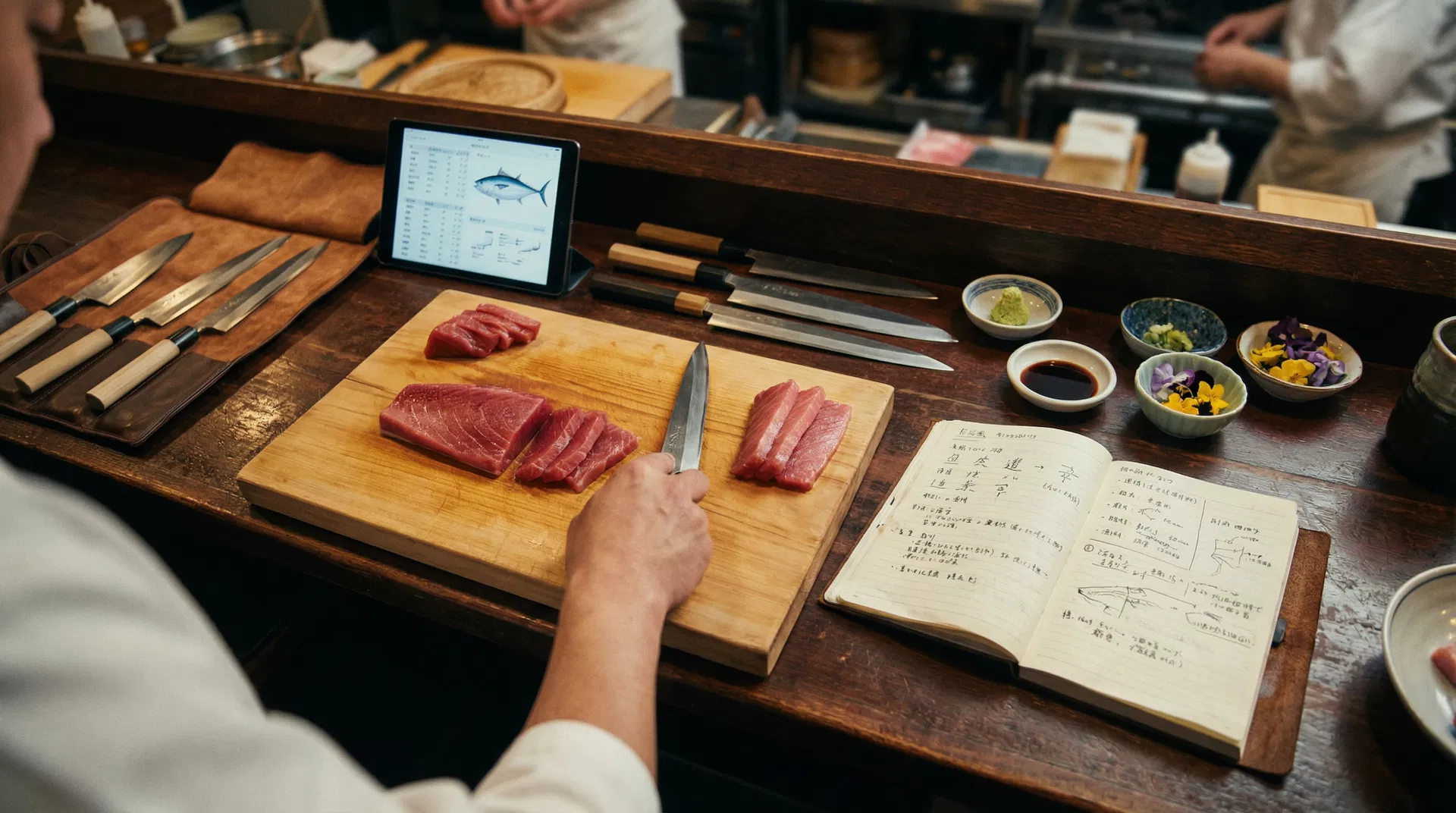
Maximizing fish yield begins with the fundamental skills of the butcher. The process is a craft that blends precision, knowledge of fish anatomy, and a respect for the ingredient. It starts the moment the fish arrives. The first rule is to maintain the cold chain relentlessly. Fish should be kept as close to 0°C as possible, which means working quickly in a chilled environment and using ice liberally. A cold fish is a firm fish, and firm flesh is significantly easier to cut cleanly, resulting in less tearing, less waste, and a higher-quality final product. The right tools are non-negotiable. An arsenal of razor-sharp, flexible filleting knives, a sturdy boning knife, and even a heavy-duty cleaver for larger species are essential. Dull knives are a butcher's worst enemy; they crush and tear delicate muscle fibers, reducing both yield and the texture of the final portion.
The actual breakdown of the fish should be a systematic and deliberate process. For a typical round fish, this involves scaling, gutting, and removing the head and fins with precise, confident cuts. When filleting, the knife should glide along the bone structure, following the natural contours of the fish to leave as little meat on the frame as possible. Each cut should have a purpose. After removing the main fillets, a skilled butcher will go back to the frame to trim any remaining pockets of meat, which can be used for tartares, stuffings, or staff meals. This meticulous approach ensures that every possible gram of valuable protein is harvested, turning what might have been waste in a less disciplined kitchen into a usable, profitable product. This is where the true artistry liesin seeing the potential in every part of the fish.
The Butcher's Art: Techniques for Maximizing Yield
Utilizing the 'Waste': From Trim to Treasure
In a truly efficient kitchen, the concept of 'waste' is redefined. The parts of the fish that are not destined for the center of the platethe head, collar, bones, and trimare not discards; they are opportunities. These so-called off-cuts are packed with flavor and can be transformed into high-value menu items or foundational kitchen staples. The most immediate use is creating a rich, flavorful fish stock or fumet. Simmering the bones, head, and trimmings with aromatics extracts deep, savory notes that become the base for soups, sauces, and risottos, adding complexity and depth that cannot be replicated with a powdered base. This practice alone can significantly reduce food costs and add a layer of authenticity to your dishes.
Beyond stocks, the creative applications for fish trim are nearly limitless. The collar (kama), the section just behind the gills, is a prized cut in Japanese cuisine, known for its rich, fatty meat. Grilled or broiled, it can be a spectacular daily special. The trim and smaller pieces of flesh can be minced for tartares, blended into brandades, or used in fish cakes and dumplings. Even the skin, when scaled and crisped, can become a delicious, textured garnish. By embracing a whole-fish philosophy, you not only maximize your yield in a literal sense but also open up new avenues for culinary creativity, reduce your environmental footprint, and demonstrate a profound respect for the animal.
Calculating True Cost: The Edible Portion Price Per Kilogram
Understanding yield percentage is the first step; the next is applying it to uncover the true cost of your seafood. The edible portion price per kilogram is the most accurate measure of your food cost, as it reflects what you pay for the meat that actually gets plated and sold. The formula is simple but transformative for menu engineering: (Wholesale Price per kg / Yield Percentage) = True Cost per Usable kg. This calculation strips away the weight of the head, bones, and trim, revealing the real financial investment in the final product. It is this number, not the supplier's invoice price, that should be the foundation for your menu pricing strategy, ensuring that every seafood dish is not only delicious but also profitable.
Let's consider a practical example with a 10-kilogram whole King Salmon purchased at $30 per kg, for a total cost of $300. A skilled butcher achieves a 65% yield, resulting in 6.5 kilograms of usable, skin-off fillet. Using our formula, the calculation is: ($30 / 0.65) = $46.15. This means the true cost of that pristine salmon fillet is not $30, but $46.15 per kilogram. If another butcher only achieves a 60% yield (6.0 kg), the true cost rises to ($30 / 0.60) = $50.00 per kg. This $3.85 difference per kilogram can have a massive impact on your profit margins over weeks and months. This data empowers chefs to make informed decisions, whether it's investing in butchery training to improve yield or adjusting menu prices to reflect the actual cost of goods sold.
Whole Fish vs. Pre-Portioned: A Strategic Sourcing Decision
The Economics of Control
The decision to buy whole fish versus pre-portioned fillets is a classic kitchen dilemma, balancing cost, control, convenience, and quality. Opting for whole fish is a commitment to in-house butchery, and it offers several distinct economic advantages. The most significant is the potential for a lower true cost per kilogram. By taking on the labor of processing, you are not paying a premium for your supplier to do it. This approach provides maximum control over portion size and specification, allowing you to customize cuts for different dishes and ensure every fillet meets your exact standards. Furthermore, as we've discussed, buying whole fish provides a wealth of 'off-cuts' like bones, heads, and collars, which can be transformed into stocks, specials, and staff meals, adding another layer of value and reducing overall food cost.
However, this control comes at a price. The primary drawback of a whole-fish program is the investment in skilled labor. A proficient fish butcher is a valuable asset, and their time and expertise are a significant operational cost. In a tight labor market, finding and retaining this talent can be a challenge. A whole-fish program also requires dedicated space for processing, including a proper butchering station and adequate refrigerated storage. For smaller kitchens or operations with limited staff, the logistical demands of breaking down several species of fish daily can be overwhelming, potentially leading to inconsistencies or even lower yields if not managed by a skilled hand.
Whole Fish vs. Pre-Portioned: A Strategic Sourcing Decision
The Convenience Factor
On the other side of the equation is the convenience of pre-portioned or filleted seafood. The primary benefit is the significant reduction in labor. Your kitchen staff can focus on cooking and plating rather than butchering, which can be a major advantage in a busy service. This approach also offers unparalleled consistency. Every fillet or loin arrives cut to a precise weight and specification, eliminating variations that can occur with in-house butchery. This predictability simplifies inventory management, portion control, and menu costing, making it an attractive option for large-scale operations, multi-unit restaurant groups, or kitchens prioritizing speed and ease of execution. For many establishments, the higher purchase price is a worthwhile trade-off for the labor savings and operational simplicity.
Of course, convenience has its own set of costs. Pre-portioned fish will almost always have a higher cost per gram than a whole fish from which a high yield is extracted. You are paying for the processor's labor, expertise, and facility overhead. This can impact your menu pricing and overall profitability if not carefully managed. Additionally, you lose the versatility and value of the off-cuts. There are no bones for stock, no collars for the grill, and no trim for tartare. This can limit culinary creativity and force you to purchase products like stock base that you could have otherwise made in-house. The choice ultimately depends on a careful analysis of your restaurant's specific concept, skill level, labor costs, and volume.
The Role of Quality: How Premium Sourcing Improves Yield
The theoretical yield percentages of any given fish are only achievable if the quality of that fish is impeccable. The journey from ocean to kitchen is fraught with risks that can degrade quality and, in turn, decimate your yield. This is where the importance of a trusted supplier and an unbroken cold chain becomes paramount. When a fish is handled properly and kept at a consistent, optimal temperature (ideally between 0°C and 2°C) from the moment it’s caught, its cellular structure remains intact. This results in firm, resilient flesh that is easier to butcher with precision. A fish that has suffered from temperature fluctuations will have softer, more delicate flesh that can tear easily during filleting, leading to a direct and often significant reduction in usable meat.
This is why sourcing from a supplier like True World Foods Canada, with its renowned JapanFish Express service and unwavering commitment to cold chain integrity, is a direct investment in your yield. A superior-quality fish not only tastes better but also behaves better under the knife. Reduced moisture loss (drip loss) means you are paying for more actual fish and less water. Furthermore, a fish that has been maintained in pristine condition has a lower risk of spoilage and bacterial growth, which can lead to parts of the fish being discarded. The difference between a 65% and a 60% yield on a high-value fish like King Salmon can be substantial, and that difference is often determined long before the fish ever reaches your kitchen. Premium sourcing isn't an expense; it's a strategy for maximizing the return on every seafood investment.
Data-Driven Kitchens: Tracking Yield Over Time
What gets measured gets managed. To truly master your seafood costs, you must move from occasional calculations to a systematic process of tracking yield data over time. Implementing a simple tracking system is one of the highest-leverage activities a chef or kitchen manager can undertake. This doesn't require complex software; a basic spreadsheet shared among the kitchen team can be incredibly effective. For every whole fish that is processed, record the essential data points: the date of delivery, the species, the initial weight, the final usable weight of the fillets or loins, the name of the butcher who processed it, and the resulting yield percentage. This creates a powerful dataset that provides objective insights into your operations.
Over time, this data will reveal trends that are invisible in the day-to-day rush of service. You might discover that one butcher consistently achieves a higher yield than another, presenting a clear training opportunity. You might find that the yield from a certain species drops during its spawning season, allowing you to adjust your purchasing strategy or menu features accordingly. This data also provides a benchmark for quality control with your suppliers. If you notice a sudden drop in yield from your usual delivery, it could indicate an issue in the supply chain that needs to be addressed. By tracking this information, you transform your kitchen's butchery from a matter of opinion into a process of continuous, data-driven improvement.
Conclusion: From Grams to Grand Profits
In the demanding environment of a professional kitchen, profitability is forged in the details. The journey from a whole, pristine fish to an exquisite dish on a customer's plate is a process of transformation, and at the heart of that process lies the critical concept of yield. As we have seen, understanding, calculating, and maximizing fish yield is not merely an academic exercise; it is a core competency for any successful seafood program. It is the bridge between the price you pay and the profit you make, a discipline that combines the artistry of the butcher, the strategy of the manager, and the discerning palate of the chef. It demands precision, consistency, and a commitment to minimizing waste at every step.
Ultimately, mastering your fish yield is about respecting the ingredient and optimizing your resources. It involves a holistic approach that encompasses everything from the techniques used on the cutting board to the data tracked in a spreadsheet. It also underscores the profound importance of your sourcing decisions. Partnering with a supplier who shares your commitment to quality, like True World Foods Canada, provides the essential foundation for achieving exceptional yield. By starting with a superior product that has been meticulously handled through an unbroken cold chain, you are setting your kitchen up for success. By embracing the principles outlined in this guide, you can turn every gram of premium seafood into a cornerstone of your restaurant's financial success and culinary reputation.